 Prague Jewish Quarter Tours
Terezin Concentration Camp: What It Was and How to Visit
The Terezin concentration camp, known in German as Theresienstadt, stands north of Prague, about an hour away by bus. This guide covers what happened in the fortress town between 1941 and 1945, the numbers, the sites the Terezin Memorial runs today, and how to reach them on your own by bus 413 or the train to Bohusovice nad Ohri. If you would rather go with a guide, the Terezin tour from Prague and the Terezin Ghetto and Camp Tour both make the trip from the city. The page keeps to published facts and figures from historical records. Where sources disagree on a number, both figures are given. The bookable tours are compared on all Prague Jewish Quarter tours.
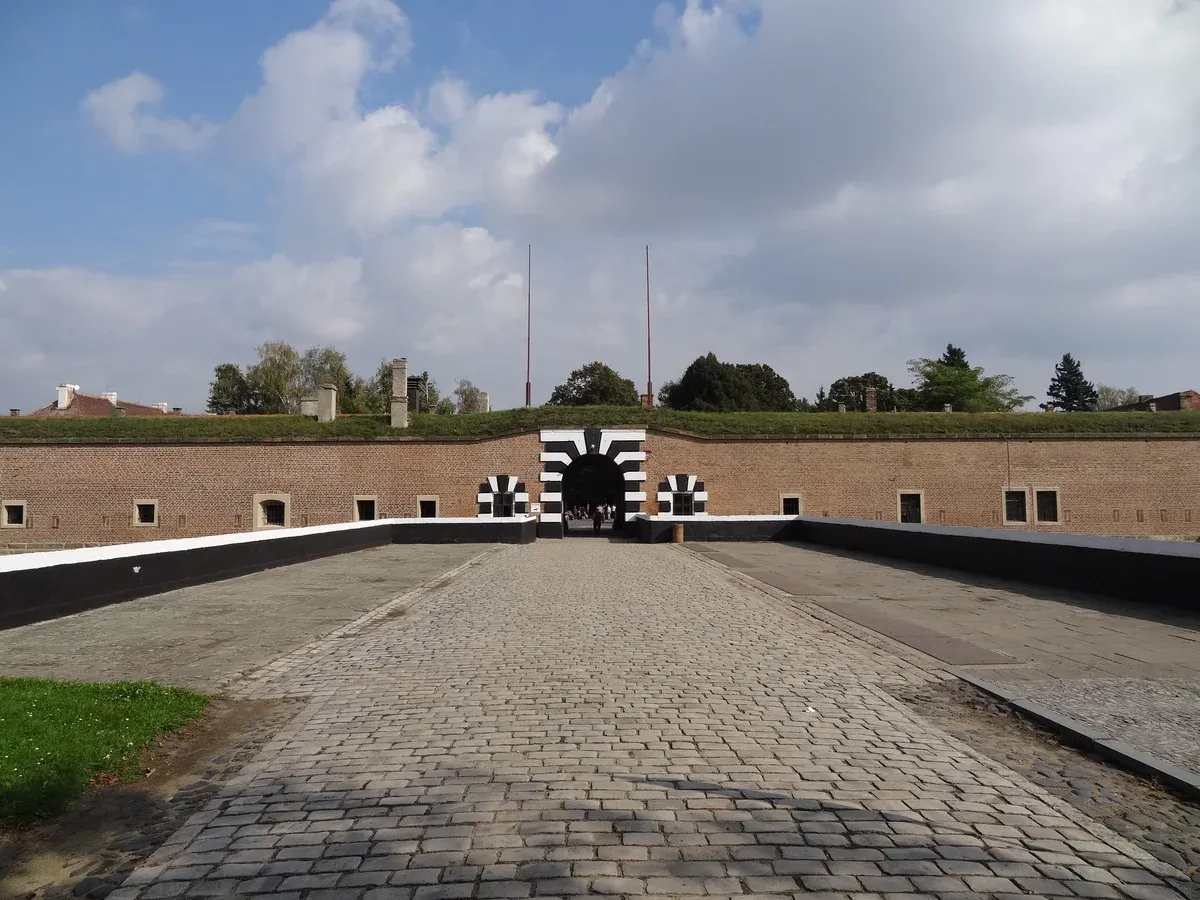
The main gate of the Small Fortress in Terezin. Photo: Cherubino, CC BY-SA 4.0, via Wikimedia Commons
Quick answer Terezin at a glance
The Terezin concentration camp was a fortress town in the Czech Republic, about 60 to 70 km north of Prague, where the Nazis ran a Jewish ghetto from 24 November 1941 to 8 May 1945. Around 144,000 to 154,000 people passed through it. The Small Fortress next door had been a Gestapo prison since 1940. Today the Terezin Memorial runs the whole site, and the memorial itself suggests allowing 4 to 6 hours for both parts.
Key takeaways
- Short on time? The Terezin Tour from Prague covers the Small Fortress in 4.5 hours from Prague for $62 per person.
- Want the full picture? The Terezin Ghetto and Camp Tour runs 6-7 hours with a historian guide and up to 8 travelers.
- Read the full history below in what Terezin was, from the fortress to the ghetto's liberation.
- Planning the trip yourself? Jump to visiting the memorial for hours, the sites and the bus 413 route from Letnany.
What Terezin Was
Terezin began as a fortress built in the 18th century. During the war it held a ghetto and, next to it, a Gestapo prison. Both parts matter to understanding what you will see.
The Fortress Town
Emperor Joseph II ordered the fortress built on 10 January 1780 and named it after his mother Maria Theresa. Building started in October 1780 and took ten years. The fortress area covers 3.89 square kilometers.
The Small Fortress lies east of the Ohre river and the walled Main Fortress town lies to the west. The town sits about 3 km south of Litomerice, near where the Ohre meets the Elbe. Sources differ on the founding date: one record gives the order of 10 January 1780, another the founding on 22 September 1784.
Today Terezin has about 2,900 residents.
- Joseph II's fortress, named after Maria Theresa, dated 10 January 1780 (order) or 22 September 1784 (founding) depending on the source
- Built from October 1780 over ten years, a fortress area of 3.89 km2
- Small Fortress east of the Ohre, walled Main Fortress town to the west
- About 3 km south of Litomerice, about 2,900 residents today
The Small Fortress: A Gestapo Prison
The Small Fortress became a Gestapo prison in 1940, before the ghetto existed. Some ghetto prisoners were sent into the Small Fortress: 239 ghetto prisoners had been received there before 12 October 1944. When you visit, the Small Fortress is the part covered by the shorter day tour. The Terezin Tour from Prague includes admission and a 1-hour guided tour of the Small Fortress, while the Terezin Ghetto and Camp Tour covers both the ghetto and the camp.
- Gestapo prison from 1940
- 239 ghetto prisoners received before 12 October 1944
- Run today as part of the Terezin Memorial
The Ghetto, 24 November 1941 to 8 May 1945
The Nazis turned the Main Fortress town into a Jewish ghetto. The first transport arrived on 24 November 1941 with 342 men. In 1942 alone, 101,761 people entered the ghetto, and the population peaked at 58,491 on 18 September 1942.
About 40,000 arrivals came from Prague, which had over 92,000 Jewish residents in 1939. About 144,000 to 154,000 people passed through the ghetto in total.
- First transport: 24 November 1941, 342 men
- 101,761 arrivals in 1942, peak population 58,491 on 18 September 1942
- About 40,000 arrivals from Prague
- About 144,000-154,000 people in total
Death and Deportation
The numbers are the core of the history. 33,521 people died in Terezin itself before 20 April 1945. 88,196 were deported to extermination camps. About 42,000 people were deported in 1942, of whom only 356 are known to have survived. In September and October 1944, 18,401 people were deported.
On 15-18 December 1943, about 5,000 were deported to the Auschwitz family camp. On 24 August 1943, 1,200 children arrived from Bialystok. None of them survived.
About 23,000 people in total survived the ghetto. Around the liberation, a typhoid epidemic killed more than 1,500 people.
- 33,521 died in Terezin before 20 April 1945
- 88,196 deported to extermination camps
- Of about 42,000 deported in 1942, 356 survived
- 1,200 children from Bialystok arrived on 24 August 1943, none survived
- About 23,000 people survived in total
The Red Cross Visit and the Propaganda
A beautification campaign began in February 1944. The Red Cross visit took place on 23 June 1944, after the staged beautification. The delegate Maurice Rossel reported that no one was deported, which was false: about 42,000 people had been deported in 1942 alone, and 18,401 more would be deported in September and October 1944.
A propaganda film was shot in August and September 1944, finished on 28 March 1945 and shown only four times. The children's opera Brundibar, written by Hans Krasa with a libretto by Adolf Hoffmeister, was performed in the ghetto. Krasa rebuilt the score from memory there.
The Terezin premiere was on 23 September 1943 and the opera ran 55 times. A special performance for the Red Cross was filmed, and many of those filmed, including Krasa and the child performers, were later sent to Auschwitz.
- Beautification began February 1944, Red Cross visit 23 June 1944
- Propaganda film shot August-September 1944, shown only 4 times
- Brundibar ran 55 times in the ghetto from 23 September 1943
Cultural Life in the Ghetto
Life in the ghetto included lectures, a library and a children's magazine. The ghetto held 2,309 lectures and ran a Central Library of over 100,000 volumes. Children produced the magazine Vedem.
Children also made drawings, and this connects Terezin to Prague: the Pinkas Synagogue in Josefov exhibits children's drawings from Terezin. Sources give two figures for them, about 4,500 drawings and 4,387 drawings as listed in the UNESCO register. Both numbers refer to the same collection, which is on the UNESCO Memory of the World register.
- 2,309 lectures held in the ghetto
- Central Library of over 100,000 volumes
- Children's drawings: about 4,500, or 4,387 in the UNESCO register
Liberation and the Memorial
The Red Cross took over administration of the ghetto on 2 May 1945 and the SS fled on 5-6 May. The Red Army liberated the ghetto on 8 May 1945. Repatriation was complete on 17 August 1945.
The Terezin Memorial was founded in 1947 as the Memorial of National Suffering. Its parts are the Small Fortress, the Ghetto Museum, the Magdeburg Barracks, the crematorium, the columbarium, the National Cemetery and the Jewish Cemetery. The Ghetto Museum opened in 1991 and the memorial drew almost 260 thousand visitors in 2024.
| Date | What happened |
|---|---|
| 10 January 1780 | Joseph II orders the fortress built, named after Maria Theresa (another source gives founding on 22 September 1784) |
| October 1780 | Building starts, lasting ten years |
| 1940 | Small Fortress becomes a Gestapo prison |
| 24 November 1941 | First transport arrives with 342 men, the ghetto opens |
| 18 September 1942 | Peak population of 58,491 |
| February 1944 | Beautification campaign begins |
| 23 June 1944 | Red Cross visit after staged preparations |
| 24 August 1943 | 1,200 children from Bialystok arrive, none survive |
| 2 May 1945 | Red Cross takes over, SS flee 5-6 May |
| 8 May 1945 | Red Army liberates the ghetto |
| 1947 | Terezin Memorial founded |
| 1991 | Ghetto Museum opens |
Sources: Theresienstadt Ghetto, Terezin
Visiting the Memorial
The Terezin Memorial runs several sites spread across the fortress town and the Small Fortress. Here is what each one is, when it opens, and how much time to set aside.
The Sites and Their Hours
The memorial's parts are the Small Fortress, the Ghetto Museum, the Magdeburg Barracks, the crematorium, the columbarium, the National Cemetery and the Jewish Cemetery. The Small Fortress keeps seasonal hours, opening 9:00-17:00 from April to October and 9:00-16:00 from November to March. The Ghetto Museum opens 9:00-17:00 year-round.
The National Cemetery holds about 10,000 victims and the Jewish Cemetery about 9,000 burials. The ticket is valid 4 days and covers the Small Fortress and the ghetto sites, each once. This page does not give the memorial's ticket price.
Small Fortress admission is included in the Terezin tour from Prague.
| Site | What it is | Hours |
|---|---|---|
| Small Fortress | Gestapo prison from 1940, east of the Ohre | 9:00-17:00 April-October, 9:00-16:00 November-March |
| Ghetto Museum | Opened 1991, about 250,000 visitors a year | 9:00-17:00 year-round |
| Magdeburg Barracks | Part of the memorial | Not stated |
| Columbarium and crematorium | Part of the memorial | Not stated |
| National Cemetery | About 10,000 victims buried | Not stated |
| Jewish Cemetery | About 9,000 burials | Not stated |
How Long to Allow
The memorial itself suggests 4-6 hours for both parts of the site. Guided tours must be pre-booked: the Small Fortress tour lasts 70 minutes and the ghetto tour lasts 120 minutes. If you take a tour from Prague instead, the Terezin Tour from Prague runs 4.5 hours and covers the Small Fortress with a 1-hour guided tour, admission included, for $62 per person.
Note that its listing excludes the Jewish cemetery and crematorium, so it does not cover the full site. The Terezin Ghetto and Camp Tour runs 6-7 hours and covers both the ghetto and the camp for $148.73 per person.
- Suggested time on site: 4-6 hours for both parts
- Small Fortress guided tour: 70 minutes, pre-booked
- Ghetto guided tour: 120 minutes, pre-booked
- Ticket valid 4 days, each site once
Closed Days
Sources disagree on the memorial's closed days. One secondary page quoting the official site says the memorial closes on 24-26 December and 1 January. A search summary of the same official page says it opens daily except Christmas Day.
Check the official channels before you travel around the holidays. The Small Fortress winter hours of 9:00-16:00 give you a shorter day from November to March. If you visit in winter, plan around the earlier closing.
- One source: closed 24-26 December and 1 January
- Another source: open daily except Christmas Day
- Winter hours November-March: 9:00-16:00 at the Small Fortress
Getting There on Your Own
Terezin lies about 60 to 70 km north of Prague, near where the Ohre meets the Elbe. Sources give both figures: about 60 km and about 70 km. The simplest public transport is bus 413 from Letnany metro, which takes about an hour and costs CZK 100.
By train, the journey to Bohusovice nad Ohri station takes about 1.5 hours, and the station is 4 km from the town. Guides to the rest of the Jewish sites in the city are on Prague Jewish Quarter tours, and the Terezin children's drawings connect directly to the Pinkas Synagogue in Josefov, which is worth visiting before or after your trip north.
- Bus 413 from Letnany metro: about 1 hour, CZK 100
- Train to Bohusovice nad Ohri: about 1.5 hours, station 4 km from town
- Distance from Prague: about 60 km by one source, about 70 km by another
Getting There From Prague
Terezin can be reached from Prague by public transport. Two self-guided routes are set out here from the published facts.
Bus 413 From Letnany
The simplest route is bus 413 from Letnany metro. The bus takes about an hour and costs CZK 100. Check the return timetable before you set off, because the return time decides how long you get at the memorial.
If you would rather not handle the connections yourself, the day tours below include transport from Prague.
| Option | Route | Time | Cost |
|---|---|---|---|
| Bus 413 | Metro line C to Letnany, then bus 413 | About 1 hour on the bus | CZK 100 |
| Train | Prague to Bohusovice nad Ohri, then 4 km to town | About 1.5 hours on the train | not stated |
Train To Bohusovice Nad Ohri
Trains from Prague reach Bohusovice nad Ohri in about 1.5 hours. The station is 4 km from Terezin, so plan how you will cover the last leg.
How Long To Allow
The memorial suggests 4 to 6 hours to see both parts, the Small Fortress and the ghetto sites. Guided tours of 70 minutes for the Small Fortress and 120 minutes for the ghetto are available and must be pre-booked. With about an hour of travel by bus, a self-guided visit takes most of a day.
The Ghetto Museum keeps 9:00 to 17:00 hours all year, and the Small Fortress opens 9:00 to 17:00 from April to October and 9:00 to 16:00 from November to March, so winter visits need an earlier start.
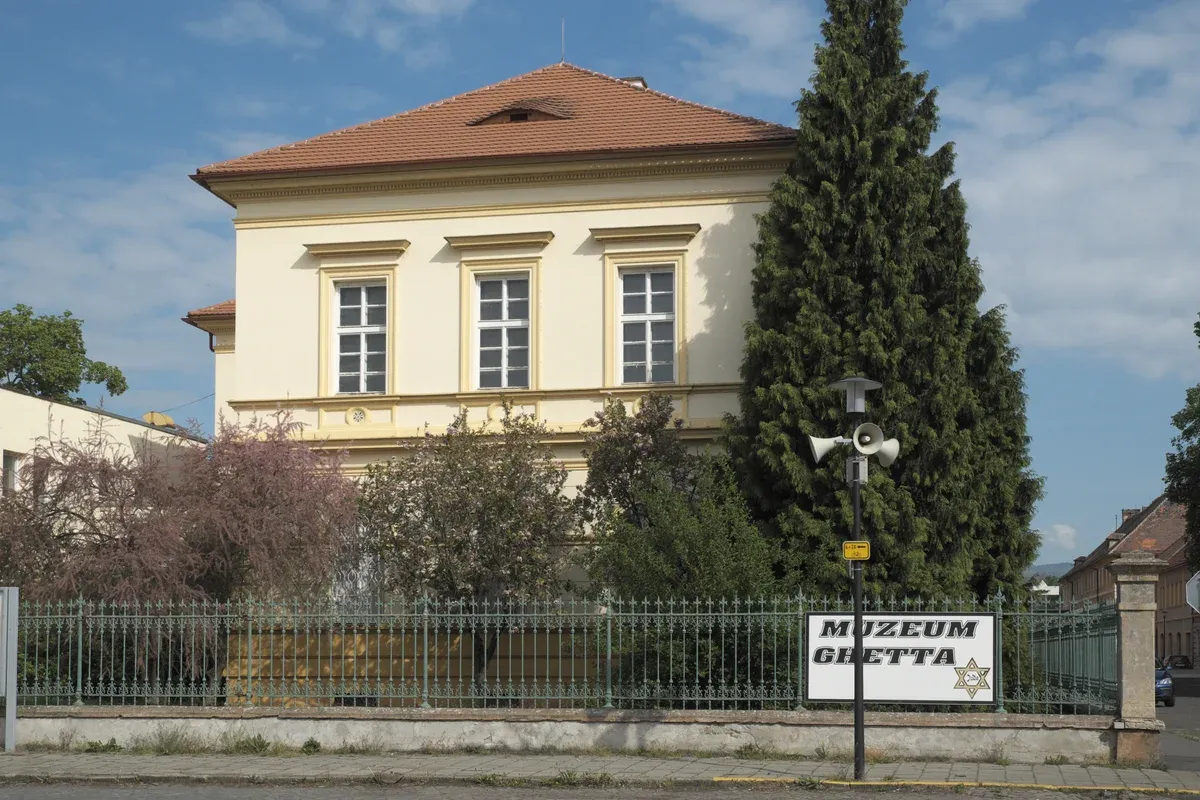
The Ghetto Museum building in Terezin. Photo: GFreihalter, CC BY-SA 4.0, via Wikimedia Commons
Going With a Tour
Two guided day tours run from Prague to Terezin. They differ in length, price and scope, and the full breakdowns live on their own pages.
The Day Tours Compared
The shorter option is Terezin Concentration Camp Guided Tour with Audio at $62 per person, running 4.5 hours from Prague. Admission to the Small Fortress and a 1-hour guided tour of it are included, plus an online audio guide. Food and drinks, headphones, and the Jewish cemetery and crematorium are not included. Note that the listing is unclear about whether the Large Fortress and cemetery visit is covered.
The longer option is Terezin Ghetto and Camp Tour at $148.73 per person, running 6 to 7 hours in a group of up to 8. A historian guides it and it covers both the ghetto and the camp, with private transport from Old Town Square. Admission is not stated in its inclusions. Food and drinks are not included on the $62 tour. The longer tour offers free hotel pick-up only for reservations made through the operator's website, so check the details before booking. For a fuller comparison, see the Terezin tour from Prague page or the Terezin Ghetto and Camp Tour page.
Which One Fits Your Trip
If you have half a day and want the Small Fortress with transport handled, the $62 tour is the shorter and cheaper choice. If you want the whole story across both the ghetto town and the fortress camp, and can give 6 to 7 hours, the $148.73 tour is the in-depth option with a historian guide and a small group. Travelers who want full control of their timing can instead take bus 413 from Letnany and buy entry at the memorial themselves.
Practical Tips For Your Visit
These points come from the memorial's published times, ticket terms and transport facts.
Do
- Do allow 4 to 6 hours, because that is the memorial's own suggestion for seeing both the Small Fortress and the ghetto sites properly.
- Do pre-book the 70-minute Small Fortress and 120-minute Ghetto guided tours, because both must be reserved ahead of your visit.
- Do check the season before you set out, because the Small Fortress closes at 16:00 from November to March while the Ghetto Museum stays open to 17:00 all year.
- Do keep your ticket, because it is valid 4 days and covers the Small Fortress and the ghetto sites, each once.
- Do take bus 413 from Letnany and confirm the return departure, because the bus takes about an hour and costs CZK 100 and the return time decides how long you stay.
Don't
- Don't assume the $62 tour covers the cemetery and crematorium, because the listing names the Jewish cemetery and crematorium among its exclusions.
- Don't bring headphones expectations on the coach tour, because headphones are not included and you must bring your own.
- Don't plan lunch at the memorial on the short tour, because food and drinks are not included.
- Don't turn up after 16:00 in winter, because the Small Fortress closes at 16:00 from November to March.
Frequently Asked Questions
How far is Terezin concentration camp from Prague?
Sources give two figures. Czech Wikipedia puts Terezin about 60 km from Prague, and other references say about 70 km north. Either way, bus 413 from Letnany takes about an hour. For a day trip with transport arranged, see the Terezin tour from Prague.
How long should I allow for a visit?
The memorial itself suggests 4 to 6 hours for both the Small Fortress and the ghetto sites. Guided tours of 70 minutes and 120 minutes exist and must be pre-booked. Add travel time on top. The Terezin Ghetto and Camp Tour allows 6 to 7 hours from Prague for both parts.
How do I get to Terezin by public transport?
Take metro line C to Letnany and catch bus 413, which takes about an hour and costs CZK 100. Alternatively, take the train to Bohusovice nad Ohri, about 1.5 hours from Prague, and cover the last 4 km from there. The Terezin tour from Prague page covers the guided option.
What can you see at the Terezin memorial today?
The memorial's parts are the Small Fortress, the Ghetto Museum, the Magdeburg Barracks, the crematorium, the columbarium, the National Cemetery and the Jewish Cemetery. One ticket valid 4 days covers the Small Fortress and the ghetto sites, each once.
When was the Terezin ghetto liberated?
The Red Cross took over administration on 2 May, the SS fled on 5 to 6 May 1945, and the Red Army liberated the ghetto on 8 May 1945. About 23,000 prisoners survived. The Pinkas Synagogue in Prague carries the names of Jewish victims from Bohemia and Moravia.
What happened to the children's drawings from Terezin?
Children in the ghetto made art and the magazine Vedem. Sources record 4,387 drawings in the UNESCO register, and other references cite about 4,500. The drawings are shown at the Pinkas Synagogue, part of the Jewish Museum Prague.